|
|
|
|
|
Društvo je upisano u registar Trgovačkog suda u Zagrebu pod brojem Tt-08/7797-2
MBS: 080661952
MB: 2396475
OIB: 51551401153
Poslovna banka:
Privredna banka d.d.
Račkoga 6, 10 000 Zagreb
Broj žiro-računa: 2340009-1110343004
IBAN: HR23 2340 0091 1103 4300 4
BIC: PBZGHR2x
Temeljni kapital Društva iznosi 20.000,00 kuna i uplaćen je u cijelosti.
Uprava društva: Ranka Grubešić Obad, Damir Obad
Direktor: Ranka Grubešić Obad, Damir Obad
Registered with the Commercial Court in Zagreb under the registration number Tt-08/7797-2. Bank info: Privredna banka d.d., Radnička cesta 50, 10000 Zagreb Investment capital: 1.020.000,00 HRK |
|
|
|
 |
|
hr en |
 UkrRIS-Danube – River Information Services on the Ukrainian Danube
 Lock Management System
 Development of an AIS Adapter in the CISE Environment
 FAIRway Danube II – Procurement of Equipment for Inland Waterway Marking
 Upgrade of the VTMIS System
 FRED - Fire Free MED
 Development and Integration of Passenger Cabin Navigation Module for RPIS
 Swiss National Crew Database (CH NCDB) – Digitalization and Integration with the European System
 Austrian National Crew Database (NCDB) – Implementation of International Crew Data Management System
 Maintenance of AIS and VHF Systems
 Upgrade of Czech AIS central system
 Supply and installation of hardware and software for Czech radio VHF control and command system on Laba and Vltava rivers
 Supply and installation of hardware for Czech AIS system on Laba and Vltava rivers
 Provision of project management services and technical assistance within the RIS COMEX project
 DAPhNE project
 EcoSUSTAIN project
 Technical assistance and supervision for installation of equipment and integration of navigation monitoring system on the Danube River
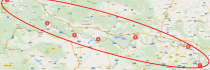 RIS implementation on Sava waterway
 RIS system development in the Czech Republic
 CroRIS system maintenance
 Studies in the framework of the IRIS Europe III project
 Action plan for development of Inland waterway shipping in Croatia
 Pilot Implementation of RIS on the Lower Odra River, Poland
 Technical assistance for Reconstruction of the Port of Vukovar – New port East
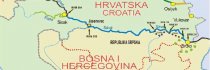 Technical Assistance for rehabilitation and improvement of the Sava River waterway
 NEWADA duo
 Technical Assistance for Master Plan of the Sisak New Port
 RIS Implementation in Serbia
  Feasibility Study of the PannonRIS Upgrade
 CoPo Project
 Upgrade of Slovak AIS system
 Lock Management System implementation at the Đerdap lock within the scope of the RIS Serbia project
 Installation, configuration and integration of a RIS subsystem on a BLADE chassis of the Serbian RIS central segment
 Detailed specification design and development of the ERI subsystem within the framework of the RIS implementation project in the Republic of Serbia
 Software for the VoIP voice signal transfer, busy signal transfer and channel control of transmitters via microwave and satellite Ethernet communication
 Software Development
  Hardware Development
 Project Management and Consulting
 viadonau
 Ministry of the Sea, Transport and Infrastructure
 Port of Switzerland
 RheinPorts GmbH
 Periskal Group
 KIOS
KIOS iC consulenten Ziviltechniker GmbH
 TINA International GmbH
 VUD
VUD Ministry of the Interior - Republic of Croatia
 Novofer Zrt.
 Komteh
 National Association of Radio Distress-Signalling and Infocommunications - RSOE
 Ředitelství vodních cest České republiky
 FRED - final conference
 FRED project presented at EUROPEAN WEEK OF REGIONS
 FRED project kick-off
 Successful finalization of the DAPhNE project
 Succesful finalization of the EcoSUSTAIN project
 RIS Week in Liege, Belgium
 DAPhNE newsletter - June 2019
 Final event of the DAPhNE project
 DAPhNE newsletter - February 2019
 EcoSUSTAIN: Interreg MED info day organized in Zagreb
 EcoSUSTAIN: 5th Partner meeting organized
 EcoSUSTAIN: project brochure released
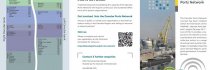 DAPhNE flyer
 EcoSUSTAIN: STMS pilot application implemented in Spain and Bosnia and Herzegovina
 EcoSUSTAIN: third Staff Exchange event organized
 Danube Ports Network active
 EcoSUSTAIN: second Staff Exchange event organized
 PANACeA event, Podgorica, May 16th – May 18th, 2018
 EcoSUSTAIN - installation of sensor-equipped buoy in NP Krka
 DAPhNE - initial meeting of the DANUBE PORTS NETWORK held
 DAPhNE project
 The Seabin Project
 DISC held in Budapest
 Progress report - Sava RIS project implementation
  DISC Conference 2015 held in Budapest
  PLATINA2 Final Event
 RIS WEEK held in Lille, France
 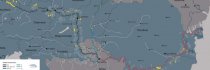 Critical sections on the Danube
  Poduzetnički impuls 2015!
 DO THE RIGHT MIX
 Evaluation of RIS Implementation for the period 2006-2011
 Stakeholder meeting for the project Action Plan for Development of Inland waterway Shipping in Croatia held
 The European Union presented 9 main corridors, two of them run across Croatia
 Address change
 RIS Implementation in Serbia Finalized
 CoPo Project Closing Conference
 ISO 9001:2009
 RIS on board - must haves
  Sava Days 2012
 Water routes tested for London Games
 CIP Eco Innovation call for proposals open - 34.8 Million Euro
 Barge to Business 2012
 Danube Strategy – facilitation of cooperation between Croatia, Hungary and Serbia
 NAIADES II
 Call for CIP-IEE-2012
 IRIS Europe II